


Libido problems and lack of desire in Copenhagen
Body-based approach to libido problems
Most people experience changes in their desire at some point. This can manifest as a lack of sexual desire, performance problems, or a sexuality that is difficult to understand or regulate. The causes can include stress, performance anxiety, low self-esteem, health challenges, or relationship problems.
Talking to a sexologist or therapist can provide important insight into the problem. But understanding something mentally can be a long way from creating noticeable clarity and change in the body.
At Hands-on Sexology, we therefore combine conversation with sexual guidance and physical work. This allows you to both understand what influences your desire and to examine it in practice – in a safe and clearly agreed framework.

01
CONVERSATION
03
MASSAGE
02
TOUCH
04
EVALUATION
THE 4 STEPS OF THE PROCESS
A FOUR-STEP PROCESS
This process helps you explore what affects your desire and what is needed for the body to open up to touch and sexual energy again. The precise framework is always adapted to your boundaries and needs.
The process helps you to:
-
get to know your body better
-
discover different forms of desire
-
let go of old performance patterns
-
work with breathing and body awareness
-
learn to be in your sexuality without having to “succeed” all the time
1. CONVERSATION
We explore how your libido-related difficulties manifest, when they arise, and which thoughts, feelings and experiences may be affecting your desire.
2. TOUCH
Together with an instructor and a practice partner, we explore different forms of touch, presence and intention. You learn how touch can awaken or inhibit desire, and how to take an active role when you are lying on the massage table—for example, by noticing what you feel, communicating clearly and letting go of expectations. It's up to you to decide if you want to work with a male or female practice partner.
3. INTIMATE MASSAGE
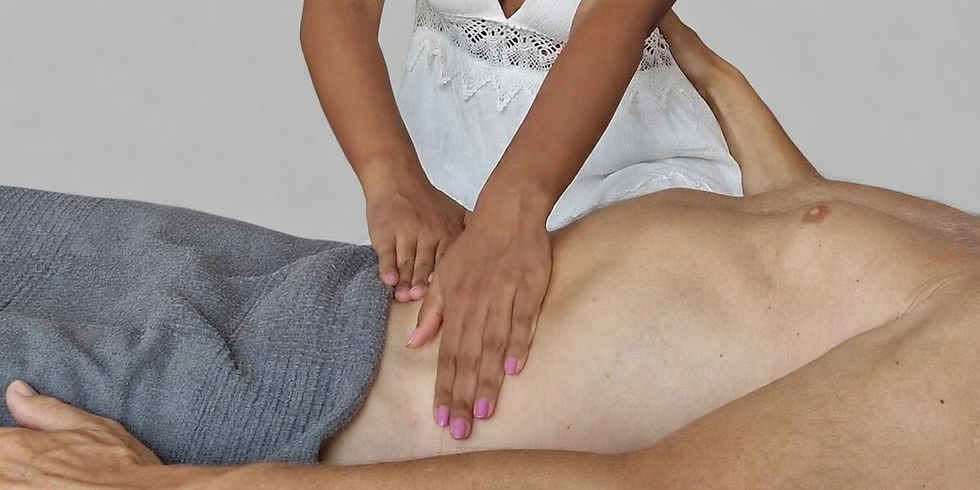
You receive a massage during which you may choose to be naked and, by prior agreement, erogenous zones may be included. You do not need to perform or respond in any particular way. Instead, you can explore what creates calmness, desire, tension, or restraint in your body.
4. EVALUATION
After the massage, we discuss what you experienced and any patterns that became apparent. Based on this, we identify practical tools and possible next steps that you can use alone or with your partner.
Dictionary of libido problems
Lack of desire
Lack of desire means that you experience less interest in sex, intimacy or sexual contact for a period of time. This can be due to stress, relationship problems, hormonal conditions, psychological strain or changes in life situation and well-being.
Decreased sex drive
Reduced sexual desire means that the desire is still present, but weaker than before or weaker than desired. Many people experience this at times throughout their lives.
Erection problems
A broad and more colloquial term for problems with erection, sexual confidence or arousal. Often used as a less clinical term than impotence.
Impotence
Impotence is an older medical term for persistent problems achieving or maintaining an erection. Many people today prefer to use a term such as “erectile dysfunction” because impotence can be perceived as harsh or stigmatizing.
Erectile dysfunction
The medical term for persistent problems with erection. Used especially in healthcare and research. It can be caused by both physical and psychological conditions.
Performance anxiety
Performance anxiety occurs when the focus shifts from pleasure and presence to concern about performing, satisfying the partner, or “functioning properly.” It can affect desire, erection, and the ability to orgasm.
Sexual insecurity
A feeling of not feeling safe, attractive, or relaxed in sexual situations. Sexual insecurity can affect desire, intimacy, and the ability to enjoy sex.
Asexual
An asexual person experiences no or very little sexual attraction to other people. Asexuality is not necessarily a problem or dysfunction, but a natural variation in human sexuality.
Libido
Libido is another word for sexual drive or sex drive. Libido can vary greatly throughout life and is influenced by body, emotions, relationships and life situation.
Sexual dysfunction
A collective term for various challenges related to sexuality.
Premature ejaculation
Premature ejaculation means that the man ejaculates sooner than desired and has difficulty controlling his arousal. The problem is very common and is often related to tension, stress, or lack of physical control.
Delayed ejaculation
When it is difficult or almost impossible for a man to reach climax, even with prolonged stimulation. This can be due to psychological, relational, and physical conditions.
Erotic blockages
A broad term for emotional or physical patterns that limit desire, pleasure, or sexual freedom. May be associated with shame, stress, past experiences, or internal conflicts.